Our Vision
We envision a space industry where any engineer can design a full mission — from orbit selection to spacecraft sizing to bill of materials — in the time it takes to run a meeting.
Physics guardrails ensure every result is senior-grade, whether the user has 2 years or 20 years of experience. The space industry demands concept-to-orbit in one year. The engineering tools should match that tempo.
Our Mission
Vecteur automates space systems engineering across ECSS Phases 0, A, and B1. From a single mission statement, the platform generates orbit design, constellation architecture, spacecraft sizing, link budgets, and a complete bill of materials — cross-validated against NASA SPICE, ESA Orekit, SMAD, Vallado, and ITU-R references.
We are committed to:
- 20 minutes, not 20 months: Compress Phase 0-to-PDR timelines from months of manual iteration to a single session
- Junior to senior in one click: Physics guardrails constrain every design path so junior engineers produce senior-level results
- Equations, not guesses: Every calculation cross-validated against 6+ reference tools — 99 tests, 100% pass rate
- Built for industry tempo: Concept to orbit in one year means every trade-off study must be fast, accurate, and repeatable
Roadmap to an AI-native space company.
Start with trusted AI for business and engineering. Integrate company context. Scale into a full operating system with one source of truth up to operations.
Market intelligence and Phase 0/A physics in one workspace.
Shared evidence. Teams use the same sources, assumptions, trades, and margins.
Vecteur connects to your products, suppliers, missions, requirements, reviews, and customer history.
Development runners. Agents check mission changes through development and keep the evidence reusable.
Business, engineering, program, and operations run from one source of truth.
SSOT up to ops. The company scales safely from growth to delivery with connected assumptions, decisions, and mission state.
Leadership
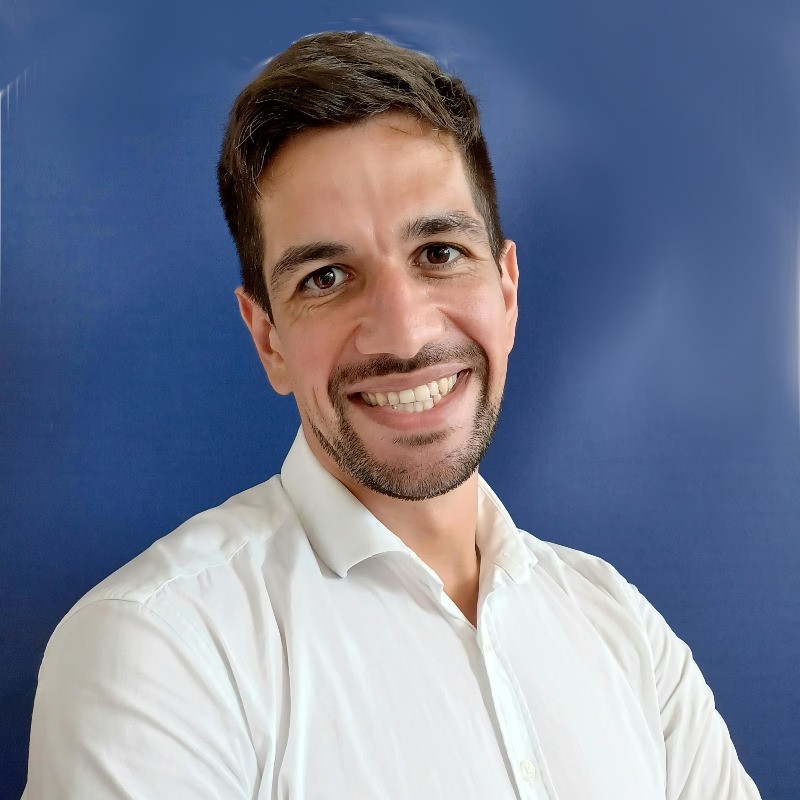
Adrien Hadj-Salah
Founder & CEO — 15+ years in aerospace & AI. ENAC, TU Berlin. Built Vecteur from first principles: physics-informed AI that produces validated engineering output, not chat responses.
Building the team — co-founder in industry identified, 2 advisors onboard
Based in Toulouse, France — at the heart of the European space industry.
Advisors
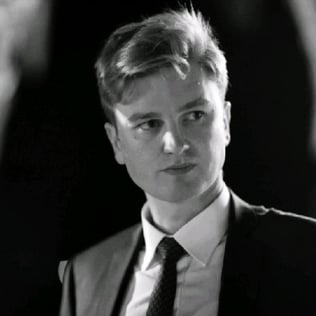
Vivien Croes
CTO @ Robin Radar Systems
Currently CTO of Robin Radar Systems, a Dutch Defensetech scale-up developing birds and drones radars, leading the technology, product, and project management into an aggressive scaling environment. PhD in Plasma Physics (École Polytechnique / Safran), MBA (Collège des Ingénieurs), Environmental Engineering (TU Munich). Previously Space Business Unit Manager at SONACA, where he built and scaled the Aerospace & Defense division from 2 to 60 FTEs in two years. Started in satellite electronics at Airbus Defence & Space. Trilingual (FR/EN/DE).
Industrial / Space expertise & network
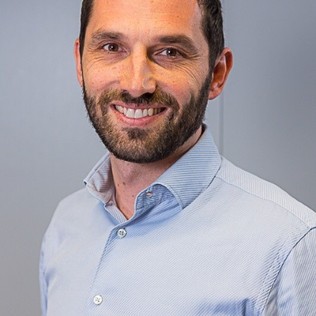
Grégory Flandin
Program Director, AI for Critical Systems @ IRT Saint-Exupéry & ANITI
Leading the DEEL program (Dependable & Explainable AI) at IRT Saint-Exupéry since 2014, driving the maturation and transfer of AI and Big Data technologies for aeronautics and space. Head of Certifiable AI at ANITI Toulouse. PhD in Mathematics & Computer Science (Université de Rennes), ISAE-SUPAERO engineering degree. Previously system engineer for Earth Observation at Airbus Defence & Space, and group leader for GNC and image processing at Astrium.
AI for Space & Critical Systems expertise
Our Values
Entrepreneurial
Move fast, own outcomes, build what matters
Mission-Driven
Every decision serves our goal: transform how humanity builds for space
Can-Do Attitude
Problems are puzzles to solve, not obstacles to avoid
Ideas & Optimism
Full of ideas, positive worldview—the future is ours to build
Get in Touch
Interested in learning more about Vecteur or exploring partnership opportunities? We'd love to hear from you.